
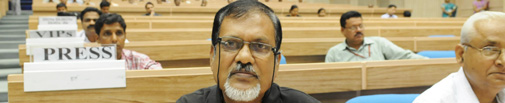




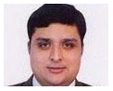


मनु जोसेफ, जो ओपेन मैग्जीन के एडिटर हैं, का एक लेख न्यूयार्क टाइम्स में छपा है. इसमें उन्होंने नौ साल पुरानी एक घटना का जिक्र किया है जिसमें वह आर्ट आफ लीविंग वाले श्री श्री रविशंकर का इंटरव्यू लेने गए हुए थे. तब श्री श्री रविशंकर मुंबई के एक अमीर आदमी के बंगले में सिंहासननुमा कुर्सी पर बैठे थे. जोसेफ के अलावा कई अन्य पत्रकार भी इंटरव्यू लेने आए हुए थे.
जब इंटरव्यू की प्रक्रिया शुरू हुई तो पत्रकार बंधु एक एक कर श्रीश्री रविशंकर के चरणों के पास जाकर बैठने लगे और रविशंकर के मुखारबिंदु से निकलने वाले वचनों को नोट करने लगे. पर जब मनु जोसेफ की बारी आई तो उन्होंने श्रीश्री रविशंकर के बगल में बैठने के लिए दूर पड़ी एक कुर्सी खींच ली और बराबरी का आसन जमा लिया. यह देखकर खुद श्रीश्री रविशंकर और उनके भक्तों के चेहरे फक पड़ गए. मनु जोसेफ कहते हैं कि उनका इंटरव्यू ठीक नहीं रहा क्योंकि रविशंकर सवालों के नपे-तुले जवाब देकर इंटरव्यू जल्द से जल्द खत्म कर देने की मंशा में थे. पूरा वाकया क्या है, वह खुद मनु जोसेफ की जुबानी पढ़िए…
Indian Spiritualism Made for the Modern Age
By MANU JOSEPH
Published: July 6, 2011
NEW DELHI — A peculiar characteristic of Indian leaders who claim to represent the average man is that they dress very differently from him. The majority of Indian men today wear shirts and trousers, including a tribal king who lives on top of a hill in the South Indian state of Kerala. But political and philosophical figures in India continue to wear costumes from another time. Among them is a middle-aged man in white silk robes.
Sri Sri Ravi Shankar, the founder of a movement called the Art of Living, is one of the most influential people in urban India. It may appear that Sri Sri is a typo, but it is actually a compliment he has paid himself. A single “Sri” is an honorific that can be granted to any Indian male. A double “Sri” is in spiritual territory.
The Art of Living Foundation, for a fee, tells people how to breathe, how to meditate and how to manage stress. It has hundreds of outlets across India and the rest of the world offering to teach breathing techniques, including one that Mr. Shankar (no relation to the famous sitar player) claims he has invented. In the first week of July, in Berlin, the Art of Living Foundation celebrated 30 years of existence.
It is not surprising that the first decade of the foundation was unremarkable. In the 1980s, the Indian middle class was closer in spirit to the poor than to the rich. There were no solutions to emotional problems. The sleeping pill came close, but there was something morbidly modern about it. Art films showed tragic creative men and licentious women in sleeveless blouses taking sleeping pills.
In the 1990s, as the economy was liberalized and the middle class grew more prosperous, the word “stress” slowly entered their vocabulary, first as a somewhat self-congratulatory description of what their professional success has done to them. Later, “stress” began to include heartbreaks and other traumas.
As urban India began to search for inner peace, the Art of Living made deep inroads into the newly affluent society. It provided a yogic alternative to going to a shrink, stigmatized even today in India as an evidence of mental imbalance. Mr. Shankar, an educated, English-speaking South Indian, impressed the modern affluent with stock phrases (“Do not fall in love, rise in love”) and a brand of Hindu philosophy that is secular in nature.
As in the case of many self-proclaimed Indian gurus, Mr. Shankar’s success lies not in deceiving others but in convincing himself that he is an extraordinary entity.
Nine years ago, I was invited by the Art of Living Foundation to interview Mr. Shankar. Mr. Shankar was in the house of a wealthy businessman in South Mumbai. In the living room he sat on a large, embellished, thronelike chair as about 50 of Mumbai’s rich and famous sat on the floor, among them the film actor Vinod Khanna and the actress Nagma. At Mr. Shankar’s feet sat a newspaper reporter, taking down notes as he spoke.
All the interviews that evening were supposed to be conducted in this manner, with the reporter on the floor, at his feet, and he on the throne.
When it was my turn, an absolute silence filled the room as I dragged a chair toward him. When I sat down, there was an audible moan from his followers. The interview did not go well. Most of his answers were snubs that elicited loud guffaws from his audience.
Over the years Mr. Shankar has tried to expand the Art of Living to the less affluent masses by offering free courses and sharing the stage with spiritual leaders who already enjoy a mass following. During the public appearances of Mata Amritanandamayi, also known as “the hugging saint” because she tries to hug every person in her audience even if there are thousands, Mr. Shankar sometimes stands by her side to share the glow. But he has not had much success.
The failure of Mr. Shankar to spread his influence beyond the affluent represents an inexplicable anomaly in a familiar pattern of Indian society. Usually, an elite obsession percolates down the layers to the masses. Most of Indian culture has spread this way, including food, rituals, music and cricket. But, for some reason, elite spiritual masters have made little impact on the masses.
Mr. Shankar has, however, succeeded in taking the Art of Living to the West, which is not surprising. In most of the first world, an Indian has a better chance of being accepted as a spiritual leader than, say, a Hungarian. In several interviews, Mr. Shankar has emphasized the branding of India as the spiritual home of the world. It is one of the most enduring and absurd of myths.
The writer and philosopher Rabindranath Tagore, who was yet another national figure who professed love for the common man but took to wearing Dumbledore’s gown to distinguish himself, said in his acceptance speech after he was awarded the Nobel Prize in Literature in 1913: “Is not the East the mother of spiritual humanity and does not the West, do not the children of the West amidst their games and plays, when they get hurt, when they get famished and hungry, turn their faces to that serene mother, the East?”
His statement may seem laughable now, but the myth at the core of his speech survives. Indians would argue that there is indeed a unique spiritual side to India, and as evidence they would present the many gurus here who find a ready market. But the fact is that many of these gurus are charlatans, like the man who convinced his female followers that his blessing was bestowed by massaging their breasts.
These exotic gurus emerge because Hinduism is not a structured faith with a central authority or a chain of command. So there is more room for spiritual freelancers.
Still, the branding of Indian spirituality is so powerful that the young and the old from the West continue to come here in search of the “truth.”
The person who finds it is requested to inform this reporter first.
Manu Joseph is editor of the Indian newsweekly Open and author of the novel “Serious Men.”



कुमार मयंक
July 7, 2011 at 10:16 am
सही किया मनु जोसेफ जी ने…स्वाभिमान बेचकर साक्षात्कार लेना सरासर घिनौना काम है…मीडिया की बदौलत हीं ये लोग आज ईस मुक़ाम तक पहुंचे हैं…
Girish Mishra
July 7, 2011 at 11:18 am
Why do you condemn only Sri Sri Ravishankar? What about slavish and irrational mentality of journalists and ouur intelligentsia?
Have you forgotten how our former PM A.B.V. used to touch the feet of Sathya Sai? What about former CJI Bhagwati’s irrational devotion to him? The first scientific adviser to Nehru too was not different?
The problem is that no effort is made to make people logical in their approach. How many people have read Hari Mohan Jha’s writings, not to speak of reading logic and logical fallacies? Growing uncertainty and lack of self-confidence have led to a fast growing God Market, a la, Meera Nanda’s book
कुमार सौवीर, लखनऊ
July 7, 2011 at 2:26 pm
अमरीका में बज गयी
रवि शंकर की पुंगी
पूं पूं पूं
tarkesh kumar ojha
July 7, 2011 at 2:50 pm
yengle mes veece®eerve ueesie Fme ûebefLe mes Heerefæ[le jnles nQ~ efpevemes He$ekeÀejeW keÀe meeyekeÀe Heæ[lee jnlee nw~ kegÀí He$ekeÀej Kego ner yeæ[er n efmle³eeW kesÀ meeceves ob[Jele cegêe ceW Dee peeles nQ~ uesefkeÀve keÀeHeÀer Ssmes Yeer nesles nQ, efpevnW ³en efmLe efle mJeerkeÀe³e& lees veneR nesleer, uesefkeÀve veewwkeÀjer keÀer cepeyetjer ceW meye kegÀí menves keÀes yeeO³e nesles nQ~
leejkesÀMe kegÀceej DeesPee, Keæ[ieHegj (He efM®ece yebieeue)
mebHeke&À ë 09434453934
tarkesh kumar ojha
July 7, 2011 at 3:00 pm
desh me kai namchin is granthi se pirit hain, wahin kuch patrakar bhi bari hastion ke samne dandwat mudra me aa jate hain , to kai naukri ki majboori me iski upecha kar jate hain
tarkesh kumar ojha, kharagpur ( west bengal)
contact_ 09434453934
jaiprakash upadhyay raipur (cg)
July 7, 2011 at 3:02 pm
media ko apni jaagir samjhane waale aise logo ko unki bhasa me hi samjhana chaahiye. ek baar raipur me ek sampraday ke dharmik sant ne bhi patrakaro ke saath aisa hi kiya tha tab maine unse kaha tha ki baat hogi to barabari se anytha nahi. har patrakar ko aisa hi karna chaahiye. thanks.
ashu
July 7, 2011 at 4:41 pm
ravi shankar je god hoge apne bhakto ke liye par hoto insaan . intarviwe ke sayam charno ne baithana to sovabhimaan ki khihaf he . sabhi me parmatma ka vaas he kya ye ravishankar ji bhul gaye he yeglat he
अमित बैजनाथ गर्ग. जयपुर.
July 7, 2011 at 4:50 pm
पत्रकारों को चाहिए कि इस तरह के लोगों के साक्षात्कारों से दूरी बनाये रखें. वैसे भी ऐसे लोगों ने आज तक कोई ऐसा काम नहीं किया है कि इन्हें अखबारों-टीवी पर जगह दी जाए, इनके चरणों में इनके भक्त बैठेंगे कोई और नहीं.
nitin thakur
July 7, 2011 at 5:25 pm
ये जोसेफ कौन सी बड़ी तोप है? इतना ही स्वाभिमान था तो इंटरव्यू ना लेता। औऱ अब नौ साल बाद कौन सा मरा हुआ आत्मगौरव जाग उठा इसका??और जो बाकी नीचे बैठे थे ये उनसे ज्यादा बड़ा था क्या??
Sageer khaksar
July 11, 2011 at 8:35 am
Joseph ne sahi kia.aise log to khud shahana zindagi guzarte hain.aur dusron ko bade bade lectur dete hain.